Advanced IP Scanner MacOS – Free Download Network Scanner

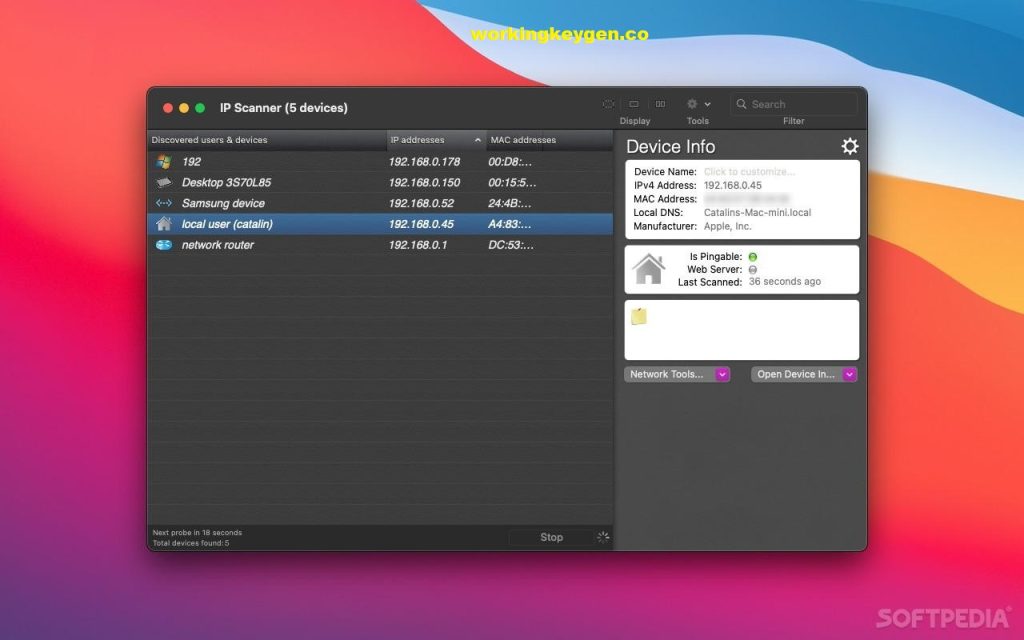
Advanced IP Scanner is a popular and powerful network scanning tool widely used to discover devices connected to a local network. It helps users identify IP addresses, device names, MAC addresses, and network resources. While Advanced IP Scanner is officially developed for Windows, macOS users often search for it to perform similar network-scanning tasks. On macOS, it can be used via compatibility methods or replaced with functionally similar tools.
This blog explains Advanced IP Scanner for macOS, its features, limitations, system requirements, and installation approach.
Key Features
1. Fast Network Scanning
Scans local networks quickly and displays all connected devices within seconds.
2. Device Discovery
Detects:
-
Computers
-
Routers
-
Printers
-
Smartphones
-
IoT devices
3. IP & MAC Address Detection
Shows IP addresses, MAC addresses, device names, and vendor details.
4. Shared Resource Detection
Identifies shared folders and network resources available on devices.
5. Remote Access Support
Supports remote access protocols such as RDP (mainly on Windows environments).
Pros & Cons
Pros
✔ Fast and accurate network scanning
✔ Identifies all devices on local network
✔ Simple and user-friendly interface
✔ Useful for IT admins and home users
✔ Free network utility
Cons
✘ No official native macOS version
✘ Advanced features are Windows-focused
✘ Limited compatibility on macOS
✘ No built-in macOS-specific optimization
✘ Some features may require alternatives on Mac
System Requirements
For macOS (Indirect / Alternative Use)
Since Advanced IP Scanner does not officially support macOS, users typically rely on compatibility solutions or alternatives.
-
OS: macOS 10.12 (Sierra) or later
-
Processor: Intel or Apple Silicon (Rosetta supported tools)
-
RAM: 2 GB minimum (4 GB recommended)
-
Network: Active Wi-Fi or Ethernet connection
-
Permissions: Network access permission required
For best experience on macOS, tools with similar functionality are commonly used instead of the native Windows version.
How to Install
Method 1: Using Windows Compatibility (Advanced Users)
-
Install a Windows compatibility layer or virtualization software on macOS.
-
Set up a Windows environment inside macOS.
-
Download Advanced IP Scanner inside that Windows environment.
-
Install and run it as you would on a Windows PC.
-
Allow network permissions for scanning.
Method 2: Using macOS Alternatives (Recommended)
-
Open your browser or Mac App Store.
-
Search for a network scanner for macOS with similar features.
-
Download and install the application.
-
Grant network permissions when prompted.
-
Start scanning your local network.
Using a native macOS network scanner is safer, faster, and more stable than running Windows-only software.
Who Should Use
-
Network administrators
-
IT professionals
-
Students learning networking
-
Home users monitoring Wi-Fi devices
Leave a Reply